Vila Ruiva, a complex of white houses built at the foot of a hill, along the road to Albergaria and Viana do Alentejo, passing by Água de Peixes. This path is nowadays a secondary road, but in the past it was the main one, as it is evidenced by the Roman Bridge that allows us to cross the Odivelas stream, which served the route between Beja and Évora.
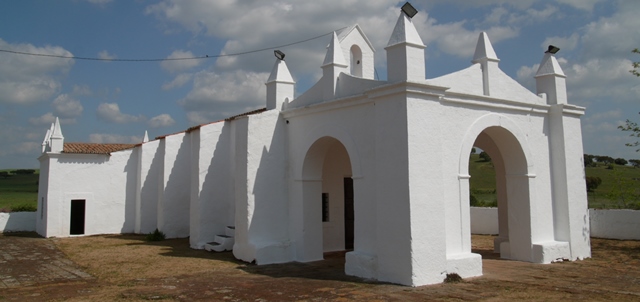
The village was district council until the early nineteenth century. It belonged to the Royal Monastery of the Conception (Real Mosteiro da Conceição) of Beja. It has a beautiful Church (Nossa Senhora da Encarnação). It also has a Roman Bridge over Odivelas stream, also known as “Bridge of Vila Ruiva”, and a dam, also Roman, known as the dam of Our Lady of the Dam (Barragem de Nossa Senhora da Represa).
The village square opens to the old Roman road, inviting visitors to stop. A delightful garden of orange trees is near the building of the Parish Council, formerly the Town Hall when it was district council, until the year 1836. The memory of that past status is still clearly visible in the belfry where the bell rang to the rhythm of city life, a symbol of municipal power.
The village was district council until the early nineteenth century. It belonged to the Royal Monastery of the Conception (Real Mosteiro da Conceição) of Beja. It has a beautiful Church (Nossa Senhora da Encarnação). It also has a Roman Bridge over Odivelas stream, also known as “Bridge of Vila Ruiva”, and a dam, also Roman, known as the dam of Our Lady of the Dam (Barragem de Nossa Senhora da Represa).
The village square opens to the old Roman road, inviting visitors to stop. A delightful garden of orange trees is near the building of the Parish Council, formerly the Town Hall when it was district council, until the year 1836. The memory of that past status is still clearly visible in the belfry where the bell rang to the rhythm of city life, a symbol of municipal power.